Celebrating Teacher Leaders
World Educator Award
Each year, the World Affairs Council honors a local educator who has made exceptional contributions in broadening the global horizons of students and colleagues. The recipient of the World Educator Award is an outstanding K-12 teacher who promotes international understanding in the classroom and contributes to the development of resources so that other educators and community members are better prepared to meet a major challenge of our time. Our children’s lives will be defined by the world within and beyond our borders; a World Affairs Council World Educator is someone who works to ensure that their students’ learning is reflective of that reality.
Whether you are a teacher and have a colleague who has been a leader in promoting international understanding at your school, a student and have a teacher who has expanded your worldview, or are a parent who is grateful for the role a teacher has played in shaping your child’s perspective–we look forward to reviewing your nominations! Nominations for the 2027 World Educator will open in the fall.
Congratulations, Catherine Ousselin!
French Teacher at Mount Vernon High School
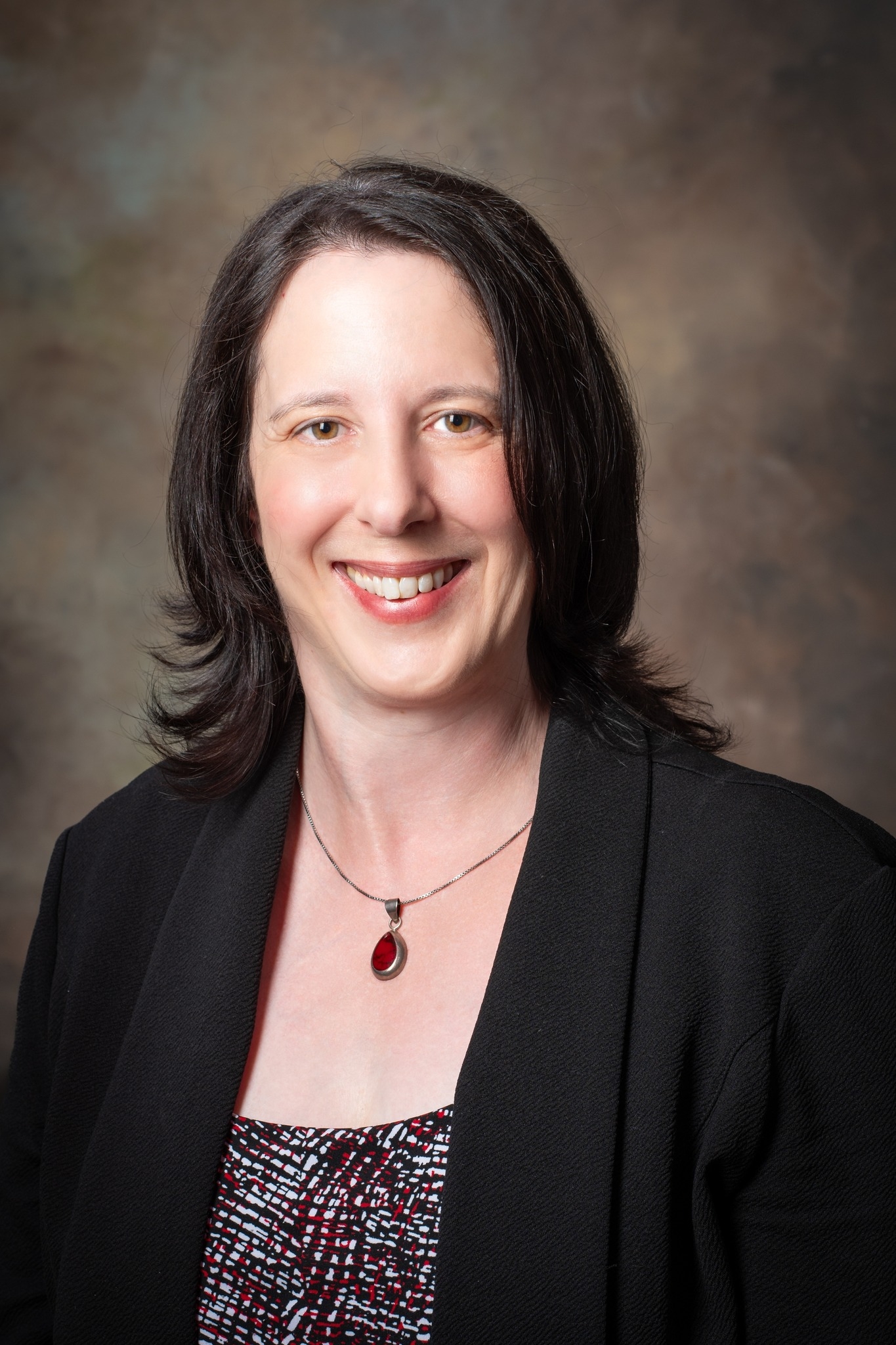
the World Affairs Council’s 2026 World Educator!
Catherine Ousselin is a French teacher at Mt. Vernon High School and the Executive Director of the Washington Association for Language Teaching (WAFLT). A passionate global educator, Catherine’s approach to teaching is deeply rooted in her early experiences growing up in Midwestern communities shaped by Filipino, Cambodian, and Vietnamese immigrants and refugees. These formative years fostered her multilingual abilities and cross-cultural understanding, laying the foundation for a lifelong commitment to global learning.
Catherine’s international experiences span nearly every continent, from Europe and East Asia to Africa and the Pacific. Through her travels, she brings authentic cultural perspectives, resources, and lived experiences directly into her classroom. Her teaching emphasizes not just language acquisition, but the development of cultural competence—ensuring that all students, regardless of their ability to travel, can meaningfully engage with the world.
In her French 1–AP courses, students explore global cultures through immersive, thoughtfully designed units that deepen their understanding of diverse perspectives. Catherine believes that being a “World Educator” means equipping students with the curiosity, respect, and skills needed to navigate an interconnected world—preparing them for future lives and careers as globally minded citizens.
What does it mean to you for someone to be a “World Educator?
“My concepts of cultural identity and practices were influenced as I grew up in a small farming town communities in South Dakota and Minnesota with Filipino, Cambodian, and Vietnamese immigrants and refugees. My global education began early as I navigated communication in multiple Asian languages with my peers.
In elementary school, I was the “cultural ambassador’ student who was assigned to any new immigrant student who needed support due to my multilingualism and cultural comprehension. My language studies were in French and German with experiences in Italian and Spanish.
In my high school sophomore year, I lived in Italy with family friends who introduced me to European products, practices, and perspectives. During this stay, I used my multilingual skills in France, Switzerland, and Germany. Previous to this experience, I was more familiar with Francophone Canadian experiences.
I have traveled to every continent except South America, which I will be visiting in 2026. My travels have led from the Soviet Union to a totalitarian government in Chad, to South Korea and Japan, throughout Europe and Mexico, as well as French Polynesia.
With each trip, I bring back products, practices and perspectives to share with my students. While not every student will be able to visit countries beyond the USA, I ensure that they have authentic resources, videos, and tangibles that allow them to understand the world around them.
My units and lessons bring the world to my students. As a learner in the homogenous Midwest, I had the opportunity to interact with people from around the world. These experiences shaped my identity as someone who interact with multiple people from various backgrounds. I incorporated my early experiences into each pathway of my professional experience.
The term “World Educator” should reflect the work of the educator from their own perspective as well as the experiences the educator provides for their students, despite any barriers to travel. Students exit the French 1-AP program at my school with cultural competencies that will support their future lives and careers. They will be able to interact with people from different cultures and perspectives with respect and curiosity.
Students in Washington State take World Geography and World History, but it is throughout their experiences in French 1-AP that they interact with these cultures in thoughtful and impactful units that provide them deeper comprehension of the world around them.“
How have you demonstrated those qualities in your own work?
As a State Department Bureau of International Information Programs U.S. Speaker and Specialist, I met with hundred of students in N’Djamena, Chad to discuss equitable access to education for children and women. This connected to my work at Mount Vernon High School through our promotion of graduation for all program.
As a workshop and webinar presenter around the United States, I promote and support unit design aligned with the UNs Sustainable Development Goals. My lessons and units are open to all educators and can be adapted to any language context. I have presented for educators of Japanese, Hmong, Arabic, Spanish, French, Chinese, and ASL.
In French 1-AP classes, students interact with their peers from around the Francophone world. We create connections with students in Francophone Canada, French Polynesia, and France. Our topics include Environmental protection, sustainable tourism, and equitable access to healthy school lunches.
Over twenty years, I have impressed upon the importance of study and travel abroad in my classes. In the past two years, six students have received travel scholarships to France, Japan, and Korea. This is an impressive increase considering that families in Skagit County do not actively consider study/travel abroad for their children. To encourage my students, I have taken French 3-AP students to Vancouver, Canada for the Winter Olympics and Seattle, Washington for art exhibitions and Francophone cultural experiences. Not all of my students may be able to leave the United States, but each student is able to travel by train to visit art museums, cultural markets, and restaurants that connect with their Francophone studies.”
How would receiving the 2026 World Educator Award help you further?
“This award will allow me to connect with educators in different curricular contents such as Social Studies, English, and Career & Technical Education to promote the importance of Global Education and Multilingualism. Washington State students, as with all students, deserve the recognition of their home and learned language skills that will connect with their future professional and personal plans.”
World Educator Award Recipients:
2026 – Catherine Ousselin, Mount Vernon High School
2025 – David Grosskopf, Roosevelt High School
2024 – Stephanie King, Granger High School
2023 – Laura Adriance, Daniel Bagley Elementary School
2022 – No educator selected due to COVID-19*
2021 – No educator selected due to COVID-19*
2020 – No educator selected due to COVID-19*
2019 – Hiromi Pingry, John Stanford International Elementary School
2018- Melissa Moffett, Industrial Design, Engineering, and Art (IDEA) School
2017- Jeff Blair, The Northwest School
2016 – Eileen Hynes, Lake and Park School
2015 – Patrick Grant, University Prep
2014 – Brandon Frederick, Bonney Lake High School
2013 – Noah Zeichner, Chief Sealth International High School
2012 – Hands for a Bridge, Roosevelt High School
2011 – Lisa Clarke, Kent-Meridian High School, Kent
2010 – Erin Lynch, Nathan Hale High School, Seattle
2009 – Ben Wheeler, Explorer West, Seattle
2008 – Bob Mazelow, Lakeside School, Seattle
2007 – Ryan Hauck, Marysville-Pilchuck High School, Marysville
2006 – David White-Espin, Secondary Bilingual Orientation Center, Seattle
2005 – Betty Lau, Franklin High School, Seattle
2004 – Wendy Ewbank, Seattle Girls’ School, Seattle
2003 – Patricia Burleson, Island View Elementary School, Anacortes
2002 – Mary Ellen Cardella, Office of Minority Affairs High School, Seattle
2000 – Sue Pike, Foster High School, Tukwila
1999 – Gretchen Coe & Anne Fitzpatrick, Mercer Middle School, Seattle
1998 – Mary Hammond Bernson, Jackson School of International Studies, Seattle
1997 – Keith Forest, Decatur High School, Federal Way