Global Classroom

Global Classroom extends the World Affairs Council’s message of global understanding to K-12 classrooms by empowering educators, students, and community members with tools, knowledge, and perspectives to engage in global studies, cultivate 21st century skills, and foster meaningful connections, locally and globally.
Educating for Global Competence
The World Affairs Council’s Global Classroom program helps students and educators across the greater Seattle region make sense of a rapidly changing world. In 2025, global competence is more important than ever. From climate change and technological disruption to migration, conflict, and shifting economies, today’s challenges demand that young people develop the skills, knowledge, and empathy to navigate complexity and contribute to solutions.
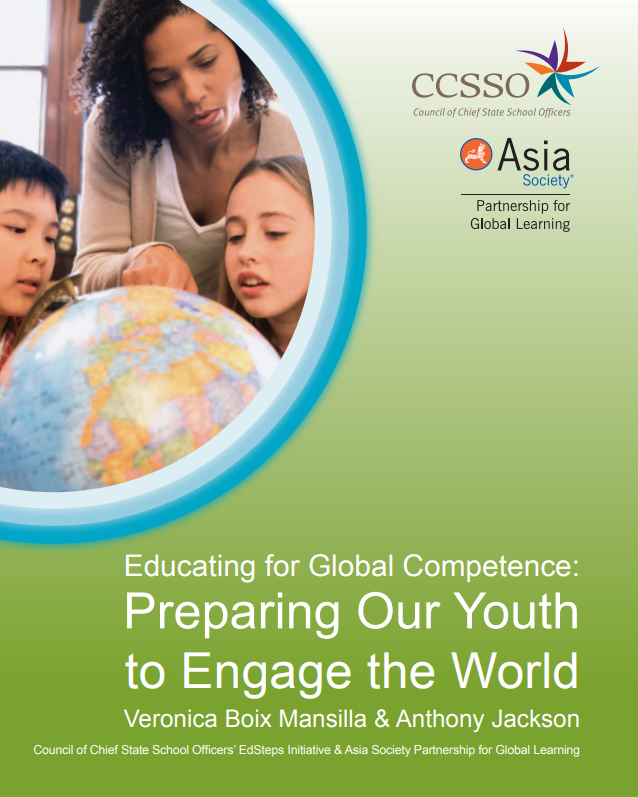
To be globally competent is to understand and respect diverse perspectives, think critically about global issues, communicate across cultures, and take informed, responsible action. These skills prepare students not only to thrive in their own communities but also to participate meaningfully in our interconnected world.
Global Classroom’s programs are guided by leading frameworks in global and international education, which emphasize that preparing youth for the future requires more than content knowledge—it requires cultivating curiosity, empathy, collaboration, and a sense of shared responsibility for building a just and equitable world.
Defining Global and International Education
Global and international education are complementary approaches that prepare students to thrive in an interconnected world. As outlined by the National Council for the Social Studies (NCSS) and Washington’s Office of Superintendent of Public Instruction (OSPI), this work integrates global perspectives across disciplines—such as social studies, sustainability, and world languages—to help students develop the knowledge, skills, and attitudes needed for responsible participation in democratic societies and the global community. Together, these frameworks affirm that global competence is not an “extra,” but a core part of education, equipping young people to think critically, respect diverse perspectives, and contribute to a more just and sustainable future.
Professional Development
Global Classroom offers accessible professional development opportunities that center global education, cultural competence, and community building. We welcome K–12, community college, and university educators to join programs designed to provide timely insights on global issues and practical strategies for the classroom. Each workshop aligns with the Washington State K–12 Social Studies Learning Standards and the College, Career, & Civic Life (C3) Framework for Social Studies, using the United Nations Sustainable Development Goals (SDGs) as a foundation to connect local learning to global challenges. Each program fosters continuous learning and collaboration, connecting educators across schools and districts to build stronger professional communities and spark meaningful dialogue. By equipping educators with these skills and perspectives, our programs create a ripple effect—reaching multiple classrooms across Washington State and beyond to positively influence students’ learning and global understanding.
Each year, Global Classroom offers a mix of in-person and virtual workshops, along with a Spring and Fall Book Club, to support educators in deepening their global knowledge. These programs feature guest speakers, panelists, authors, and interactive activities that highlight diverse global perspectives. Washington State K–12 educators are eligible to receive clock hours for participation. Participants leave with curriculum resource guides, teaching strategies, and stronger professional networks that enrich classroom learning and inspire students to engage thoughtfully with world issues. Explore our upcoming programs and register today!
Our Curriculum Resource Guide Library offers lesson plans, multimedia resources, and classroom activities that bring global issues and current events into the classroom. While designed to support Washington State’s social studies Classroom-Based Assessments (CBAs), these guides are equally valuable for teaching history, geography, economics, STEM, and world politics.

All of our global education resources are freely accessible & available online!
Each year, Global Classroom recognizes a local educator whose work exemplifies the power of teaching to expand perspectives and foster global understanding. The World Educator Award honors an outstanding K–12 teacher who not only inspires students to engage with international issues but also empowers colleagues and the wider community to think critically about our interconnected world. Award recipients are leaders who create meaningful learning experiences, contribute valuable resources, and equip others to navigate and address the defining challenges of our time. Learn more about our past World Educators, here.

“Global Education is important to me because it helps us understand the ways our lives are connected across history, borders and cultures. As a first generation American, I have personally experienced how navigating multiple cultures can shape perspective and resilience. Global Education creates opportunities to build empathy, challenge assumptions and empower communities that are often underrepresented and underestimated. For me, it is not only about learning from the world but also about contributing to conversations that make diverse voices and experiences visible.
Through this internship, I hope to strengthen my ability to engage with complex global issues and learn how to make them accessible and meaningful to teachers, students and community members. I want to gain practical skills in outreach, education and program support that will help me connect diverse communities with global conversations. My goal is to leave the program with tools I can use to bridge cultural connections and support first generation and bilingual communities.” -Estephanie Gomez, Student, University of Washington
"Global education is important to me because it builds peace and bridges between communities, creates space for understanding, and promotes inclusion. As someone from an Indigenous background in a conflict-affected region, I’ve seen how education can open doors that were once closed. It is hope, empowerment, and the ability to create positive change in communities. Global education is essential because it broadens the students’ understanding of the world, encourages empathy across cultures, and prepares them to become thoughtful and responsible global citizens. It helps us connect with diverse perspectives and see ourselves as part of an interconnected world.
Through my internship, I hope to support meaningful learning experiences that encourage students to view the world through multiple lenses and recognize the value of diversity. I am excited to engage with people from diverse backgrounds and learn more about the global issues that the world is facing today through various perspectives and foster discussions about our global world. I also look forward to gaining hands-on experience that deepens my understanding of inclusive higher education and community engagement." -Seng Mai, Fulbright Scholar, University of Washington
Student Enrichment
Inspiring the next generation of global citizens, our programs empower K–12 students to explore diverse cultures, engage deeply with international issues, and take meaningful action in their communities. By connecting local experiences to global challenges, students develop the knowledge, empathy, and skills to create positive change in a complex and interconnected world.

2025 marks the 27th year of our annual World Citizen Essay Contest (WCEC), open to students in grades 3–12 across Washington State. The contest encourages thoughtful dialogue among students, educators, families, and community members about how individuals can shape a more just and interconnected world. Many teachers incorporate the contest as a class project throughout the school year. The essay prompt is launched at the beginning of the school year—this year on September 10th, 2025—and submissions are due in March 2026. Judging takes place throughout April 2026, with winners announced in May 2026, culminating in an awards ceremony at the end of May 2026.
There are a total of nine winners, with 1st, 2nd, and 3rd place awarded in each category: elementary, middle, and high school. Winners receive exciting prizes generously provided by sponsors such as Boeing, the Seattle Storm, FRS Clipper, and more. This structure allows students to engage deeply with global issues, reflect on local and international impacts, and articulate their ideas in ways that promote meaningful action.
The Global Competence Certificate Portfolio (GCCP) empowers students to explore, reflect on, and demonstrate their global skills through meaningful projects, presentations, and portfolio development. Grounded in three essential competencies, Global Learning, International Engagement, and Language & Intercultural Learning, the portfolio encourages students to connect their experiences to real-world global challenges and opportunities. Upon completion, students present their portfolios to earn a Global Competence Certificate, recognizing their growth as globally engaged citizens. Heritage language learners in Spanish, Russian, and Romanian can also earn the Global Seal of Biliteracy, further celebrating their linguistic and cultural proficiency. Students may begin building their portfolio anytime between grades 9–11, with the flexibility to continue refining and expanding it throughout their high school journey.
The U.S. Department of State’s Office of International Visitors (OIV) launched the IVLP Classroom Initiative during the pandemic to sustain global exchange when international travel was at a standstill. As an extension of the State Department’s premier professional exchange program—the International Visitor Leadership Program (IVLP)—the initiative brings IVLP alumni into classrooms virtually to share cultural insights, lived experiences, and perspectives on global issues.
Global Classroom piloted its first visits in 2022, and they quickly proved impactful. Since then, we have hosted international visitors from Zambia, Malawi, Morocco, Croatia, Hungary, Switzerland, Malta, Ecuador, Suriname, Lesotho, New Zealand, Mexico, Guatemala, and more. These 45–60 minute virtual classroom visits enrich curriculum, spark curiosity, and give students accessible opportunities to engage with real-world perspectives that will serve them well into adulthood.

Now, in 2025, as we continue to adapt alongside our partners at the Office of International Visitors, we remain committed to providing these transformative exchanges. By connecting young people in Washington state and beyond with leaders and changemakers from around the world, the IVLP Classroom Initiative helps prepare students to navigate an interconnected future with empathy, curiosity, and confidence. Interested in participating in a virtual visit? Please complete the IVLP Classroom Interest Form.
We are excited to relaunch the Global Connections Club in 2025 for middle and high school students! This free club meets every second Wednesday of the month from 4–5 PM (after school) for one-hour virtual sessions. Just like other school extracurriculars, students are encouraged to treat this club as a meaningful opportunity to grow, connect, and lead.
The club brings youth together to explore world affairs, connect local issues to global challenges, and build cultural competence to become globally engaged citizens. Each session will feature guest speakers and opportunities for student moderators to lead conversations, keeping youth voices at the center.
Our first meeting of the 2025–2026 school year will take place on Wednesday, October 8th, 2025, and will focus on Seattle Space Week. If you’re interested in joining, please complete the WAC Global Connections Club Interest Form.
For the best viewing experience, explore this interactive report in "Fullscreen" mode
PDF version of the Global Classroom | Impact Report 2024-2025 is available here.
PDF version of the Global Classroom | Impact Report 2023-2024 is available here.
Interested in keeping up with Global Classroom programs, professional development and virtual opportunities for teachers and students? Check out our latest Global Classroom Bi-weekly Newsletter, here, and SUBSCRIBE today!
Through public events, educational programs, and citizen diplomacy initiatives, the World Affairs Council inspires global engagement. Gifts to the World Affairs Council make all this and more possible. Your support, either through annual membership (including our K–12 educator membership option) or a one-time donation, will ensure that the World Affairs Council continues to foster global conversation in our community.
Global Classroom’s reach is made possible through robust partnerships with higher education, government, and community organizations, including the University of Washington's Center for Global Studies, Washington State's Office of Superintendent of Public Instruction (OSPI), the Norcliffe Foundation, and more. A huge thank you to our community for supporting our work to bring the world into classrooms across Washington state.
2024-2025 Partners & Sponsors
Past Events
WAC Global Connections Club | Celebrating Seattle Space Week with Dr. Ioana Cozmuta
2025 EU Policy Forum Educator Workshop | Europe and the EU: Alone in a Multipolar World?
Global Shifts, Rising Voices: Celebrating Students, Educators, & Global Education, 2025 WCEC Awards Ceremony
Contact

Director
Global Classroom
rhauck@world-affairs.org